
The Ultimate Yacht Preventative Maintenance Checklist: Preserving Luxury and Performance
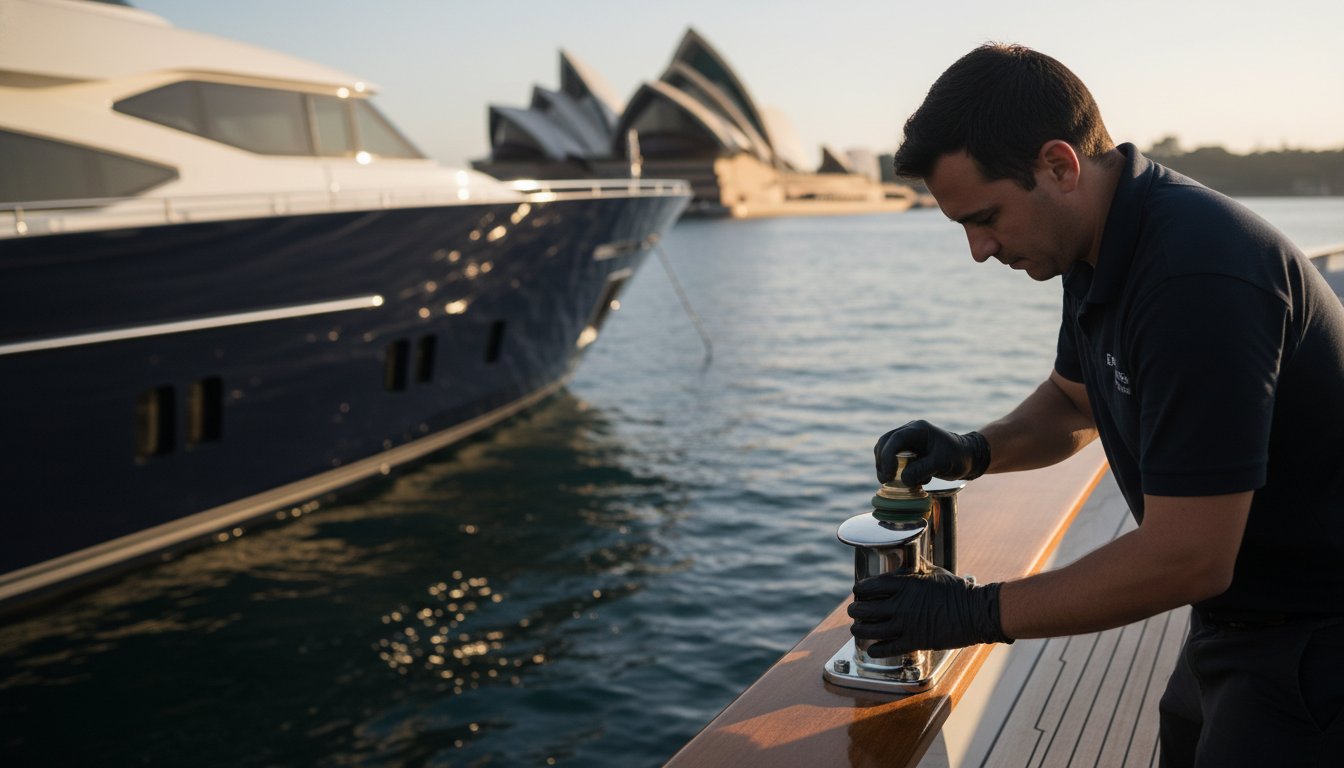
The most expensive part of owning a vessel isn't the fuel or the mooring fees; it's the sudden, heavy silence of a failed engine on a perfect Saturday morning. When you're ready to cruise our iconic waterways or host a sunset gathering on the harbour, the last thing you want is a mechanical oversight ruining the moment. Investing in consistent yacht preventative maintenance is more than just a chore for the logbook. It's a strategic move to protect your time, your safety, and your asset. You likely agree that the best kind of boating is the kind where you simply walk on and walk off, leaving the technical complexities to a refined, professional system like that offered by Neptune Oceanic.
This guide helps you master that effortless experience while ensuring your vessel remains a pinnacle of safety and sophistication. We'll cover the latest 2026 maritime standards, including the new IMO fuel flashpoint certifications and the mandatory transition away from PFOS firefighting foams. We'll also explore how to shield your yacht from the harsh Australian sun to preserve its resale value and maintain its pristine aesthetic. From engine room vitals to aesthetic detailing, this checklist provides a clear path to absolute maritime confidence.
Key Takeaways
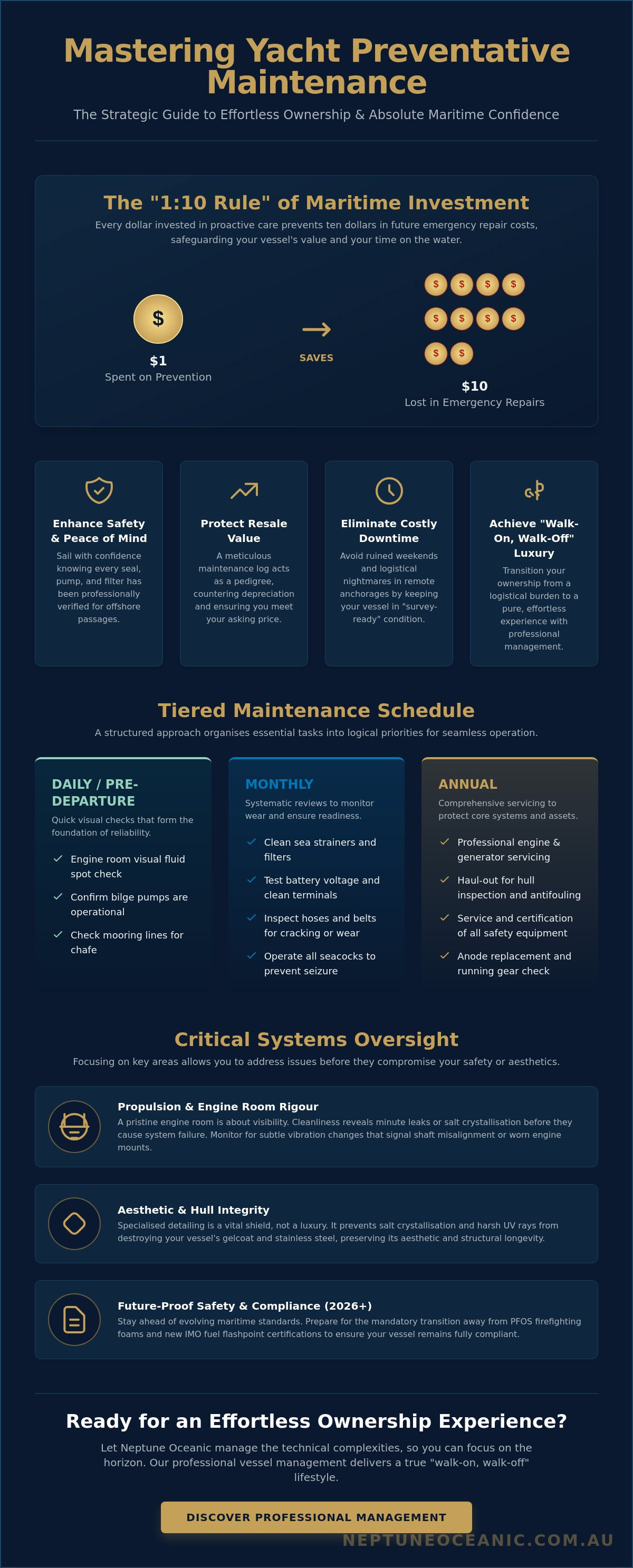
- Learn the strategic "1:10 Rule" and why every dollar invested in proactive care prevents ten dollars in emergency repair costs.
- Discover how specialised detailing acts as a vital shield, preventing salt crystallisation from destroying your vessel's gelcoat and stainless steel.
- Master a tiered yacht preventative maintenance schedule that organises essential tasks into daily, monthly, and annual priorities for seamless operation.
- Identify the critical mechanical indicators, such as subtle vibration changes, that allow you to address system issues before they compromise your safety.
- Explore how professional vessel management and syndication can transition your ownership from a logistical burden to a pure "walk-on, walk-off" experience.
The Strategic Value of Yacht Preventative Maintenance
Owning a luxury vessel is a commitment to a lifestyle of freedom, but that freedom is only as reliable as the systems supporting it. In the maritime world, two distinct philosophies exist: reactive repair and proactive care. While reactive owners wait for a component to fail before taking action, sophisticated owners understand that yacht preventative maintenance is the superior strategy for preserving both the vessel's performance and its financial value. This approach isn't merely about ticking boxes; it's a methodical way to ensure your time on the water remains uninterrupted and elegant.
Industry professionals often refer to the "1:10 Rule" when discussing vessel upkeep. This principle suggests that every dollar you invest in preventative maintenance today effectively saves ten dollars in emergency repair costs down the line. Beyond the immediate financial savings, there's a significant impact on your vessel's market position. A meticulous, transparent maintenance log acts as a pedigree for your yacht. When it comes time to upgrade or sell, a documented history of professional care provides buyers with the confidence to meet your asking price, directly countering the steep depreciation that often affects poorly managed vessels.
The true value of this strategy often reveals itself during an offshore coastal passage. There is a profound emotional benefit to knowing every seal, pump, and filter has been inspected and verified. This absolute peace of mind allows you to focus on the horizon and the company of your guests, rather than listening for unusual vibrations or worrying about the integrity of your systems while miles from the nearest marina.
Protecting Your Maritime Investment
Mechanical failures rarely happen in isolation; they tend to have a compounding effect. A minor salt-water leak in a cooling hose might seem trivial, but left unchecked, it can spray a fine mist over sensitive electrical components, leading to a catastrophic system failure. Preventative maintenance is the systematic inspection and servicing of vessel components to forestall failure. By maintaining a high standard of oversight, you protect the structural longevity of the hull and ensure that minor wear doesn't evolve into a structural liability that requires a costly haul-out and weeks of remediation work.
Avoiding the 'Downtime' Trap
In Australia, our most breathtaking anchorages are often our most remote. If a technical glitch occurs while you're exploring the Kimberley or the outer reaches of the Great Barrier Reef, the logistical difficulty of sourcing parts and specialised labour can be staggering. The cost isn't just measured in A$; it's measured in ruined weekends and disappointed guests. By keeping your vessel in a "survey-ready" condition at all times, you eliminate the risk of these technical interruptions. This high standard of readiness ensures that your yacht is always a source of indulgence and ease, never a source of logistical stress or social embarrassment.
Essential Mechanical and System Oversight
The engine room is the heart of your vessel, and its condition reflects the health of your entire maritime investment. A pristine engine room is not merely about aesthetics; it is about visibility. When surfaces are kept clean and polished, even the smallest weeping of oil or the faintest trace of salt crystallisation becomes immediately apparent. This level of cleanliness allows you to intervene before a minor leak becomes a major mechanical event. This proactive approach is the cornerstone of effective yacht preventative maintenance, ensuring that technical complexity never interferes with your time at sea.
In the demanding Australian climate, cooling systems must work at peak efficiency to combat high ambient water temperatures. Regular fluid analysis serves as a 'blood test' for your yacht, providing a data-driven look at engine health. By identifying microscopic metal shavings or coolant contamination early, you can detect internal wear before it results in a failure. For owners who prefer a structured approach to these technical reviews, the UC Davis Powerboat Inspection Checklist offers a comprehensive baseline for professional-grade oversight of mechanical and safety systems.
Propulsion and Engine Room Rigour
Propulsion systems require a focus on the finer details of shafts, seals, and alignment. Subtle changes in vibration often signal that engine mounts have settled or that a shaft is slightly out of true, which can lead to long-term transmission damage. In humid conditions, fuel quality is another critical factor. Regularly treating your tanks with biocide prevents the growth of 'diesel bug', which can clog filters at the most inconvenient times. Our comprehensive vessel management packages incorporate these meticulous checks as standard, ensuring your propulsion remains smooth and silent.
Electrical Systems and Battery Health
Your yacht's electrical grid is its nervous system, requiring constant vigilance against the corrosive effects of salt air. Managing the house battery bank is essential. Allowing deep discharge cycles can permanently reduce capacity and leave you without power while at anchor. Monthly testing of bilge pumps and high-water alarms is a non-negotiable safety task that ensures your vessel can protect itself in an emergency. Finally, regularly inspecting shore power connections and galvanic isolators prevents stray current corrosion from silently damaging your underwater metals. This methodical oversight ensures that every switch you flip results in the expected response, maintaining the seamless luxury you expect from a premium vessel.
Preserving the Aesthetic: Detailing and Hull Integrity
In the luxury maritime world, the distinction between looking good and being well-maintained is often non-existent. Professional detailing is actually a core pillar of yacht preventative maintenance. It serves as a protective barrier against the relentless Australian environment. Salt is a silent but aggressive adversary. When salt water evaporates, it leaves behind sharp crystals that act like sandpaper on your gelcoat. These crystals are also hygroscopic, meaning they pull moisture from the air, which accelerates corrosion on stainless steel and other brightwork.
Teak decks require a similarly nuanced touch to maintain their golden hue and structural integrity. While it's tempting to use a high-pressure washer to clear grime, this aggressive method strips the soft grain from the timber, significantly reducing the lifespan of the deck. A soft-bristle brush used across the grain and a specialised cleaner will preserve the timber's natural oils. For those seeking a broader perspective on routine care, the BoatUS Preventative Maintenance Guide provides excellent foundational standards for hull and surface preservation.
The Battle Against Salt and UV
The Australian sun delivers some of the highest UV levels in the world, which can oxidise gelcoat in a single season. A rigorous wash-down protocol after every day on the water is the first line of defence. This routine should include:
- Rinsing all surfaces with fresh water to dissolve salt crystals before they harden
- Using pH-neutral soaps to avoid stripping existing wax or ceramic layers
- Chamois-drying stainless steel fixtures to prevent water spotting and "tea staining"
High-quality ceramic coatings provide a modern solution, creating a hydrophobic shield that resists UV damage and makes salt removal significantly easier. Regularly polishing stainless steel fixtures prevents the structural pitting that occurs when surface oxidation is ignored for too long.
Underwater Gear and Antifouling
Protection extends below the waterline, where the battle against electrolysis and marine growth is constant. Sacrificial anodes are your vessel's primary defence against galvanic corrosion, essentially giving their life to protect your propellers, shafts, and through-hull fittings. If these anodes deplete beyond 50%, the electrical current begins attacking your expensive underwater hardware instead. Annual antifouling is equally critical; even a light layer of bio-growth can increase fuel consumption by 10% or more. Regular hull scrubbing by professional divers keeps your bow thrusters and props clear of barnacle obstruction, ensuring your yacht remains responsive and efficient during every harbour manoeuvre. This methodical underwater care is a vital component of a sophisticated yacht preventative maintenance strategy.
Your Annual Yacht Preventative Maintenance Checklist
Efficiency on the water is the result of methodical organisation. To maintain a vessel to the highest standard, you must move beyond ad-hoc repairs and adopt a tiered yacht preventative maintenance schedule. This structure allows you to categorise tasks into daily visual inspections, monthly system tests, and comprehensive annual overhauls. Maintaining a digital log of these actions provides a transparent history of care, which is invaluable when briefing your vessel manager or presenting the yacht for a future survey. A well-documented history is the ultimate reassurance for any owner, providing a clear audit trail of every filter changed and every valve exercised.
Monthly Routine Checks
Consistency is the enemy of failure. Dedicating a few hours each month to these four steps ensures your yacht's core safety systems remain operational and responsive:
- Step 1: Test all bilge pumps and float switches manually to confirm they trigger and discharge water without hesitation.
- Step 2: Exercise every seacock in the hull; moving these valves through their full range of motion prevents salt and calcium build-up from seizing them.
- Step 3: Check battery electrolyte levels where applicable and ensure all terminals are tight and free from white powdery oxidation.
- Step 4: Inspect the fire suppression system gauges in the engine room to verify the charge remains within the green operating zone.
Seasonal and Annual Milestones
While monthly checks handle the immediate systems, annual milestones address the long-term integrity of your vessel. Main engines and generators require professional servicing every twelve months regardless of the hours run. This is because engine oil can become acidic over time and rubber impellers can take a permanent "set" if left stationary for too long. Your air conditioning system also needs specialised attention; descaling the condensers with a professional-grade flush ensures the unit can handle the peak of an Australian summer without tripping on high pressure.
Don't forget the ground tackle. The anchor windlass and chain should be stripped, cleaned, and lubricated to prevent hidden corrosion from weakening your primary mooring line. It's easy to overlook the items that aren't visible from the cockpit, but these are often the most critical in a blow. All safety equipment, including EPIRBs and flares, must be checked for expiry dates annually.
Managing this level of detail requires a seasoned hand and a commitment to excellence. If you prefer to focus on the destination rather than the logistics, our vessel management packages provide a seamless way to ensure every item on this checklist is completed to a professional standard.
Effortless Ownership through Professional Management
Mastering a comprehensive yacht preventative maintenance schedule is a significant undertaking that requires technical expertise and consistent dedication. For many owners, the transition from "doing" the maintenance to "overseeing" a professional team is the ultimate luxury. Professional vessel management shifts the burden of logistics from your shoulders to an expert facilitator who acts as a high-end concierge for your maritime asset. Instead of spending your Saturday morning troubleshooting a cooling pump or coordinating with contractors, you're free to focus on the destination and the lifestyle that drew you to yachting in the first place.
This managed approach is particularly effective within a yacht syndication model. Shared ownership simplifies the maintenance burden by distributing the costs and responsibilities across a group of like-minded individuals. A dedicated vessel manager coordinates the complex web of specialist contractors, from marine engineers to shipwrights, ensuring that every task on the checklist is completed to a professional standard. This synergy ensures the vessel is always in peak condition, preserving its performance and resale value without requiring a full-time commitment from any single owner.
The Walk-On Walk-Off Experience
The hallmark of a premium management service is the "walk-on, walk-off" experience. Imagine arriving at the marina to find your vessel perfectly fuelled, meticulously cleaned, and technically sound. Every system has been verified, and the interior is styled to your preference. This level of readiness is achieved through the transparency of digital maintenance reporting, where every action is logged and available for review. By understanding the yacht co-ownership costs upfront, owners in a managed syndicate enjoy the benefits of a professionally maintained vessel at a fraction of the traditional cost and effort. It's a frictionless way to enjoy the water, where the logistical realities are managed behind the scenes.
Expert Oversight with Neptune Oceanic
At Neptune Oceanic, we've refined the process of vessel care to a science. Our team manages the complexity of a bespoke vessel maintenance plan, ensuring that your yacht receives the highest standard of detailing and mechanical oversight. We leverage an extensive network of trusted marine engineers and shipwrights across Australia, providing you with access to the finest craftsmanship in the industry. Our commitment to excellence means we don't just follow a checklist; we anticipate the needs of your vessel to prevent issues before they arise.
Choosing professional management is a commitment to your own peace of mind. It ensures that your time on the water is defined by relaxation and indulgence, rather than maintenance and repair. Join the future of boating where the technical responsibilities are ours, and the absolute freedom of the ocean is yours. When yacht preventative maintenance is handled with this level of sophistication, every voyage becomes an effortless celebration of the maritime lifestyle.
Mastering the Art of Effortless Boating
Proactive care is the defining line between a vessel that acts as a liability and one that serves as a sanctuary. Embracing a structured approach to yacht preventative maintenance protects your financial investment while securing the absolute safety of everyone on board. From the technical rigour of fluid analysis to the aesthetic shield of ceramic coatings, every action taken today ensures a seamless experience tomorrow. You've invested in a lifestyle of freedom; don't let the logistics of upkeep diminish that reward.
Neptune Oceanic provides the sophisticated framework needed to bridge the gap between complex maritime requirements and pure indulgence. Our professionally managed vessel management packages offer expert maritime oversight, ensuring your yacht remains in pristine condition regardless of the season. We specialise in facilitating the sophisticated walk-on walk-off boating experiences you deserve, where the technical details are mastered by our team so you can focus on the horizon.
Discover how Neptune Oceanic organises effortless boating for you. Your next voyage should be defined by the rhythm of the waves, not the demands of the dock. We look forward to welcoming you aboard a vessel that is always ready when you are.
Frequently Asked Questions
How often should I service my yacht engines if I don’t use the boat frequently?
You should service your engines at least once every twelve months regardless of how few hours you've logged. Marine engines are designed to run; when they sit idle, oil can become acidic and rubber components like impellers can lose their flexibility and take a permanent "set". This annual milestone is a non-negotiable part of yacht preventative maintenance that ensures your vessel is ready for an offshore passage at a moment's notice.
Does a yacht maintenance plan really help with resale value in Australia?
A documented maintenance plan is essential for preserving resale value in the Australian market. Discerning buyers and surveyors look for a clear audit trail of professional care to justify a premium price during a pre-purchase inspection. In a market where a new vessel can lose 40 to 50 percent of its value in the first decade, a meticulous logbook serves as proof of quality and helps slow the rate of depreciation.
What is the most common cause of luxury yacht breakdowns?
The most frequent cause of luxury yacht breakdowns is a failure within the raw water cooling system or issues with contaminated fuel. Clogged strainers and perished impellers lead to rapid overheating, especially in warm Australian coastal waters during summer. Similarly, the "diesel bug" thrives in humid conditions and can block filters, which is why regular biocide treatments and cooling system inspections are vital components of any routine.
Can I do my own preventative maintenance on a syndicated yacht?
Owners generally cannot perform their own maintenance on a syndicated yacht to ensure a consistent, professional standard of care for all parties involved. Because the vessel is a shared asset, all technical work and detailing must be handled by qualified contractors or the vessel manager. This policy protects the safety and investment of every shareholder, providing a "walk-on, walk-off" experience where you never have to worry about the quality of previous repairs.
How does the Australian sun affect yacht maintenance schedules?
Intense Australian UV levels significantly accelerate the oxidation of gelcoat and the degradation of sealants compared to European or American climates. While a standard wax might last six months in milder regions, it may only provide three months of protection here before the surface begins to chalk. This requires a more frequent detailing schedule or the application of high-quality ceramic coatings to prevent the surfaces from becoming porous and stained.
What is the difference between detailing and regular cleaning?
Regular cleaning focuses on removing surface salt and grime, while detailing is a restorative process that protects the vessel's long-term integrity. Detailing involves machine polishing to remove oxidation and applying specialised sealants to stainless steel and gelcoat. It is a technical form of yacht preventative maintenance that prevents salt from crystallising in the pores of your vessel's surfaces, which is something a simple wash-down cannot achieve.
How much should I budget for annual yacht maintenance?
A common industry rule of thumb is to budget between 10 and 20 percent of the vessel's value for annual maintenance and operational costs. For a high-end luxury yacht, this covers everything from mooring and insurance to engine servicing and hull antifouling. While this figure varies based on usage and vessel age, setting aside a consistent budget ensures that you can address minor issues before they become expensive emergency repairs in remote anchorages.
Is professional vessel management worth the cost for a private owner?
Professional vessel management is highly beneficial for private owners who value their time and want to ensure their asset is protected. A manager acts as a sophisticated facilitator, coordinating specialist shipwrights and engineers to ensure the vessel remains in "survey-ready" condition. This oversight manages the technical complexity behind the scenes, allowing you to enjoy a frictionless boating lifestyle where the vessel is always fuelled, cleaned, and technically sound.
Disclaimer
The content published on this blog reflects the views and experience of Neptune Oceanic and is provided for informational purposes only. While every effort is made to ensure accuracy, we make no representations or warranties regarding the completeness or suitability of any information for your individual circumstances. Nothing in this blog should be construed as financial, legal, or investment advice. All financial figures, cost estimates, and usage statistics are indicative only and may vary depending on vessel, location, and market conditions. Neptune Oceanic is a member of the Boating Industry of Australia (BIA).